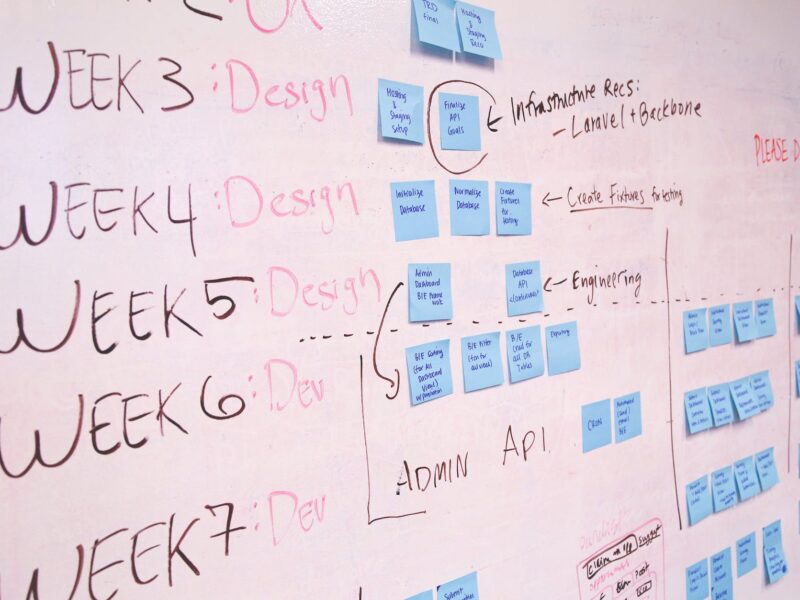

Every new project manager encounters common project management myths that can mislead and stall progress. However, if you challenge these false beliefs early on, you’ll set your projects up for success. In this article, we’ll debunk three widespread myths that often trip up first-time PMs. Moreover, you’ll gain clear insights to lead teams confidently and efficiently.
Myth 1: You Must Be a Technical Expert
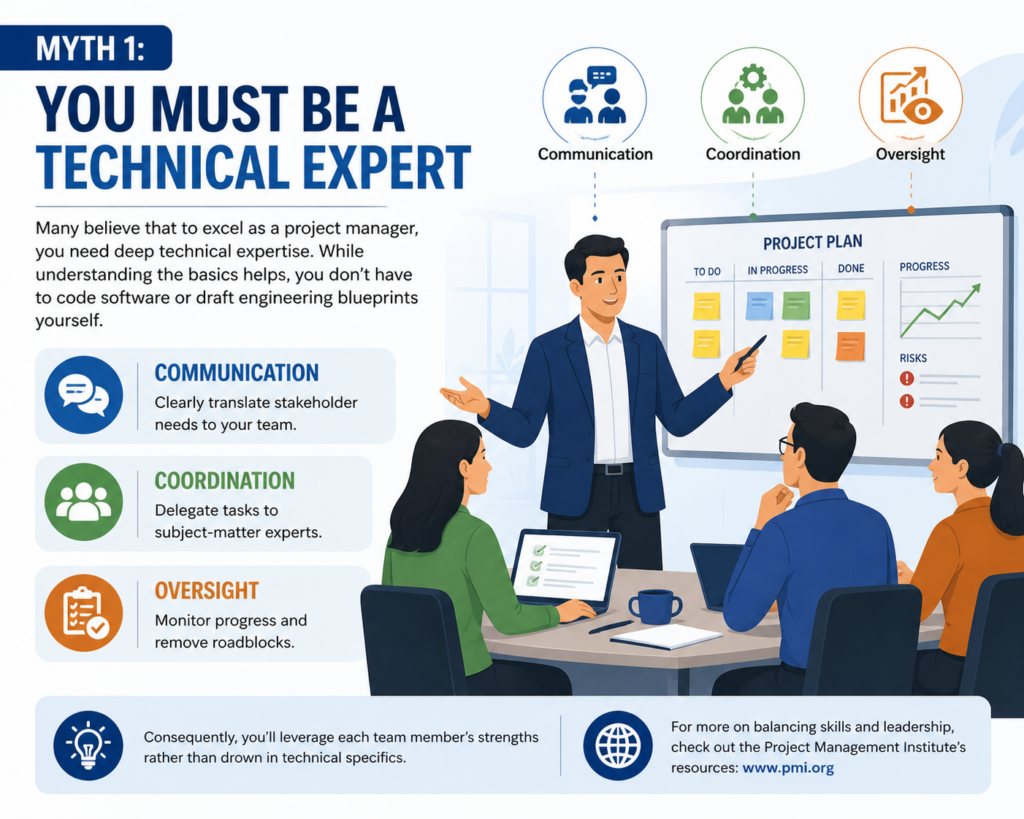
Many believe that to excel as a project manager, you need deep technical expertise. While understanding the basics helps, you don’t have to code software or draft engineering blueprints yourself. Instead, focus on:
- Communication: Clearly translate stakeholder needs to your team.
- Coordination: Delegate tasks to subject-matter experts.
- Oversight: Monitor progress and remove roadblocks.
Consequently, you’ll leverage each team member’s strengths rather than drown in technical specifics. For more on balancing skills and leadership, check out the Project Management Institute’s resources: https://www.pmi.org.
Myth 2: PMs Only Coordinate Tasks
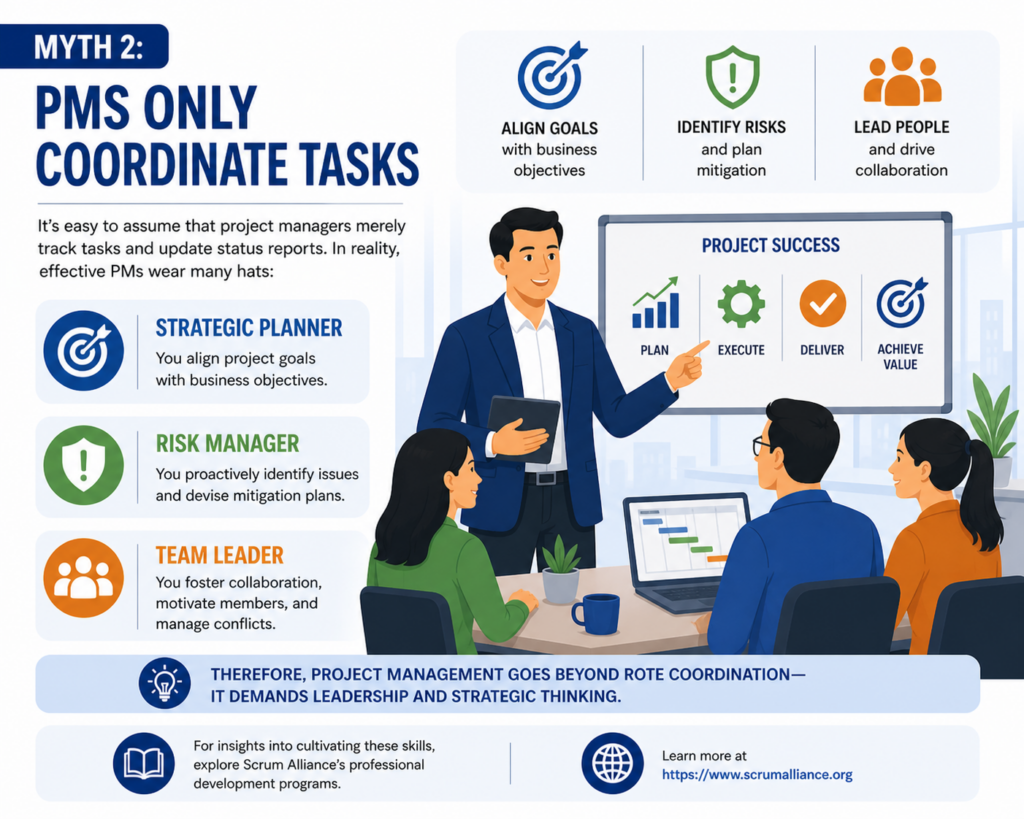
It’s easy to assume that project managers merely track tasks and update status reports. In reality, effective PMs wear many hats:
- Strategic Planner: You align project goals with business objectives.
- Risk Manager: You proactively identify issues and devise mitigation plans.
- Team Leader: You foster collaboration, motivate members, and manage conflicts.
Therefore, project management goes beyond rote coordination—it demands leadership and strategic thinking. For insights into cultivating these skills, explore Scrum Alliance’s professional development programs: https://www.scrumalliance.org.
Myth 3: Strict Process Adherence Guarantees Success
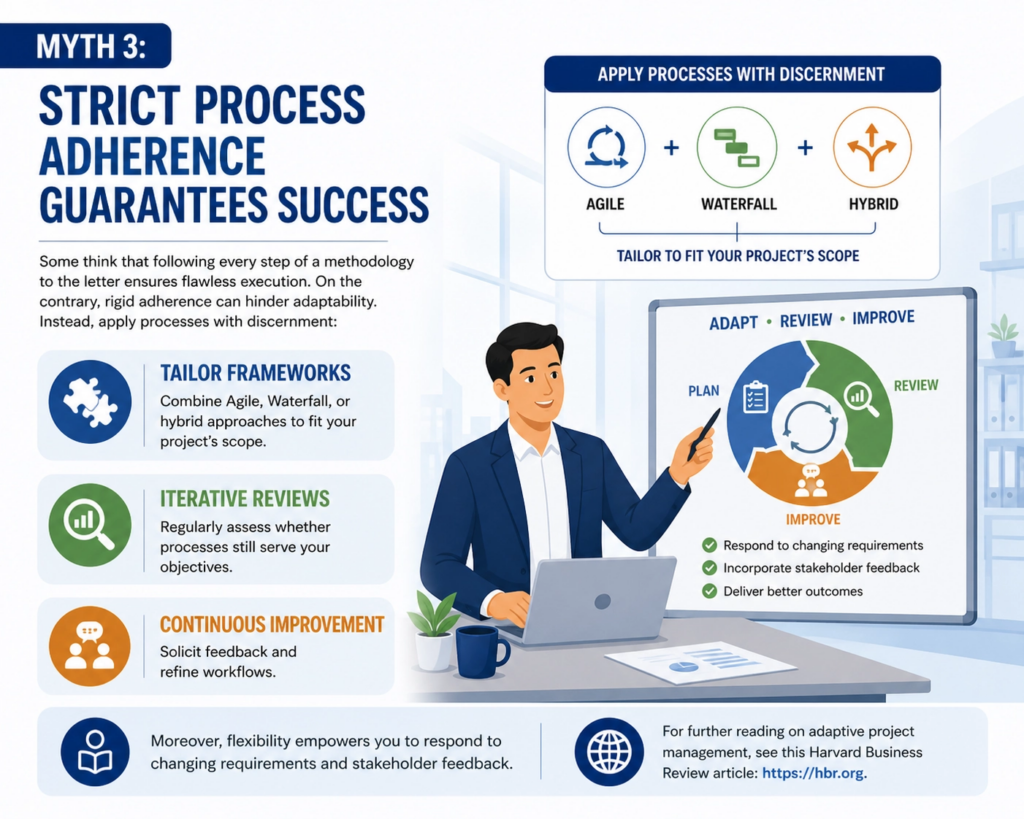
Some think that following every step of a methodology to the letter ensures flawless execution. On the contrary, rigid adherence can hinder adaptability. Instead, apply processes with discernment:
- Tailor Frameworks: Combine Agile, Waterfall, or hybrid approaches to fit your project’s scope.
- Iterative Reviews: Regularly assess whether processes still serve your objectives.
- Continuous Improvement: Solicit feedback and refine workflows.
Moreover, flexibility empowers you to respond to changing requirements and stakeholder feedback. For further reading on adaptive project management, see this Harvard Business Review article: https://hbr.org.
Review more about PM: Mastering Project Management: Your Guide to Top Kindle Books
Conclusion
By debunking these three common project management myths, you’ll avoid pitfalls that many new PMs face. Remember, you don’t need to be a technical guru; you play multiple critical roles beyond coordination, and you should adapt processes rather than follow them blindly. Ultimately, a balanced approach—combining communication, leadership, and flexibility—drives project success. Start applying these insights today to lead your next project with confidence!